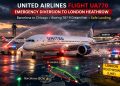
United Airlines Flight UA770 declared an in-flight emergency and diverted to London Heathrow Airport while traveling from Barcelona to Chicago. The Boeing 787-9 Dreamliner changed course after the flight crew detected a possible aircraft system alert during cruise altitude. The precautionary diversion allowed the aircraft to land safely, and no injuries were reported among passengers or crew.
The incident quickly drew attention across aviation tracking platforms and airline news outlets as flight-tracking data showed the aircraft altering its route across Europe. Emergency diversions are a standard safety procedure in commercial aviation when onboard monitoring systems detect technical irregularities.
Aviation experts note that precautionary diversions like the UA770 incident demonstrate how modern aircraft monitoring systems help prevent potential safety risks before they escalate. This article explains what happened during the United Airlines Flight UA770 emergency diversion, why the aircraft diverted to London Heathrow, and how airline safety protocols guide pilots when in-flight alerts occur.
Flight UA770 Incident Overview
| Detail | Information |
|---|---|
| Airline | United Airlines |
| Flight Number | UA770 / UAL770 |
| Aircraft | Boeing 787-9 Dreamliner |
| Route | Barcelona (BCN) → Chicago (ORD) |
| Diversion Airport | London Heathrow (LHR) |
| Incident Type | Emergency diversion |
| Reported Cause | Possible pressurization alert |
| Outcome | Safe landing |
What Happened on United Airlines Flight UA770?
United Airlines Flight UA770 departed from Barcelona–El Prat Airport in Spain and was scheduled to arrive at Chicago O’Hare International Airport in the United States. The aircraft operating the flight was a Boeing 787-9 Dreamliner, a long-haul aircraft widely used for transatlantic routes.
While cruising at high altitude, the flight crew detected a potential cabin pressurization or technical system alert. Such alerts are monitored by the aircraft’s onboard diagnostic systems, which continuously analyze cabin pressure, environmental controls, and other flight parameters.
After identifying the issue, pilots followed standard aviation safety procedures and declared an emergency. The aircraft diverted to London Heathrow Airport (LHR), one of the busiest international aviation hubs and a common diversion airport for transatlantic flights between Europe and North America. The aircraft landed safely, and no injuries were reported among passengers or crew.
Timeline of the UA770 Emergency Diversion
Understanding the sequence of events helps explain how airline crews respond quickly to technical alerts during long-haul flights.
Departure from Barcelona
United Airlines Flight UA770 departed from Barcelona–El Prat Airport (BCN) on a scheduled transatlantic route to Chicago O’Hare International Airport (ORD). The Boeing 787-9 Dreamliner began the flight normally and climbed to its planned cruise altitude.
Cruise Altitude Alert
Approximately midway through the transatlantic route, the cockpit crew received a system alert related to aircraft systems monitoring and cabin pressurization levels. Modern aircraft continuously analyze internal pressure, environmental controls, and onboard systems while flying at cruising altitudes between 35,000 and 40,000 feet.
Emergency Declaration
After reviewing cockpit alerts and aircraft diagnostics, the flight crew informed air traffic control (ATC) about the situation and declared an emergency. This declaration ensured that the aircraft received priority handling and immediate coordination with nearby airports capable of supporting a diversion.
Diversion Toward London Heathrow
Air traffic controllers coordinated a diversion toward London Heathrow Airport (LHR), one of the largest international aviation hubs in Europe and a frequent diversion airport for transatlantic flights.
Safe Landing
The aircraft landed safely at Heathrow, where airport emergency services, maintenance teams, and airline personnel were prepared to assist passengers and inspect the aircraft.
Flight Tracking Data and Aircraft Monitoring
Modern commercial aircraft transmit real-time data that allows aviation authorities and tracking platforms to monitor flights around the world. Platforms such as FlightAware, FlightRadar24, and other ADS-B tracking systems receive signals transmitted by aircraft transponders during flight.
ADS-B, or Automatic Dependent Surveillance–Broadcast, is a system that broadcasts an aircraft’s position, altitude, speed, and direction to ground receivers and satellite networks. This technology allows airlines, air traffic controllers, and aviation enthusiasts to follow flights in real time.
During the United Airlines Flight UA770 emergency diversion, flight-tracking data showed the aircraft adjusting its route across Europe before heading toward London Heathrow Airport. Such tracking systems help confirm flight path changes and provide transparency during aviation incidents. These tools are widely used by airline operations teams and aviation analysts to monitor aircraft performance and flight safety events.
Why Did Flight UA770 Divert to London Heathrow?
When pilots decide to divert an aircraft, several factors determine the diversion airport. These include distance, weather conditions, runway length, maintenance capabilities, and emergency support services.
London Heathrow was selected because it offers:
- One of the largest international aviation hubs in Europe
- Long runways capable of accommodating wide-body aircraft
- Advanced aircraft maintenance facilities
- Immediate emergency response teams
For transatlantic flights traveling between Europe and North America, Heathrow often serves as a primary diversion airport.
Possible Cause: Aircraft Pressurization Alert
Early reports suggested that the United Airlines Flight UA770 emergency diversion may have been triggered by a pressurization warning or technical system alert.
Cabin pressurization systems regulate the air pressure inside an aircraft while flying at high altitude. At cruising levels around 35,000 to 40,000 feet, outside air pressure is too low for humans to breathe normally. The aircraft’s environmental control system maintains safe cabin conditions for passengers.
If sensors detect irregular pressure levels or system faults, pilots may choose to divert the flight as a precaution. Such decisions are routine in aviation safety management.
Expert Insights on Cabin Pressurization Alerts
Cabin pressurization systems are essential for passenger safety on commercial aircraft. At cruising altitudes of 35,000 to 40,000 feet, outside air pressure is far too low for humans to breathe safely. Aircraft environmental control systems regulate cabin pressure to maintain conditions similar to those at lower altitudes.
A pressurization alert occurs when onboard sensors detect irregular pressure levels, airflow issues, or mechanical faults within the aircraft’s environmental system. Modern aircraft automatically monitor these systems through integrated diagnostic software and cockpit warning systems. If the system detects abnormal pressure conditions, pilots receive alerts that allow them to respond immediately.
Aviation safety experts note that many pressurization alerts are precautionary rather than catastrophic. However, airline operating procedures require pilots to treat these warnings seriously. Flight crews may choose to descend to a lower altitude or divert to the nearest suitable airport for inspection. In incidents such as the United Airlines Flight UA770 emergency diversion, responding quickly to cockpit alerts helps prevent potential safety risks and ensures passengers remain protected.
How Airline Safety Protocols Work During Emergencies
Commercial aviation relies on strict safety procedures designed to protect passengers and crew.
When a technical anomaly occurs, pilots follow a structured decision process:
- Evaluate cockpit alerts and onboard diagnostic systems
- Communicate with air traffic control and airline operations
- Assess nearby airports capable of handling the aircraft
- Declare an emergency if required
- Divert to the safest available airport
Aircraft also transmit transponder signals that allow controllers and flight-tracking services to monitor the situation. In some cases, pilots may use emergency transponder code 7700, which alerts controllers that the aircraft requires immediate priority.
Aviation Incident Response: How Airlines Manage Emergency Diversions
When an aircraft declares an emergency and diverts from its planned route, airline operations teams activate a coordinated response system designed to support both the flight crew and passengers. Large airlines such as United Airlines maintain an operational control center that continuously monitors flights worldwide.
Once the cockpit crew reports a technical alert or safety concern, airline dispatchers, maintenance specialists, and air traffic controllers begin coordinating the diversion. The operations team helps pilots select the safest alternate airport based on distance, runway availability, weather conditions, and maintenance facilities.
At the diversion airport, ground emergency teams, maintenance engineers, and airline staff prepare for the aircraft’s arrival. Their responsibilities include inspecting the aircraft, assisting passengers, and arranging alternative travel plans if necessary. This coordinated response ensures that unexpected events—such as the United Airlines Flight UA770 emergency diversion to London Heathrow—are handled quickly and safely.
Passenger Experience During the Diversion
Passengers onboard United Airlines Flight UA770 reportedly remained calm as the aircraft diverted toward London.
Cabin crew typically brief passengers when diversions occur and provide instructions if necessary. In most cases, diversions are precautionary and do not involve immediate danger.
After landing at Heathrow, airline staff assisted passengers with:
- Rebooking flights
- Accommodation arrangements
- Customer support services
Airlines maintain contingency plans to manage passenger logistics after unexpected diversions.
What Is Squawk 7700 in Aviation?
In aviation, “squawk 7700” refers to the emergency transponder code used by pilots when an aircraft is experiencing a general emergency. When pilots set the transponder to code 7700, air traffic control systems immediately recognize that the aircraft requires priority handling.
Aircraft transponders continuously send signals that identify the flight and its location. When the emergency code is activated, controllers can quickly identify the aircraft on radar and coordinate assistance, including clearing airspace and preparing emergency services at the destination airport.
Pilots may use squawk 7700 in situations involving technical system failures, cabin pressurization alerts, onboard medical emergencies, or other safety concerns. The code ensures that the aircraft receives immediate attention and support from air traffic control. In cases like the United Airlines Flight UA770 emergency diversion, emergency communication procedures allow aviation authorities to respond quickly and guide the aircraft safely to the nearest suitable airport.
Aircraft Used: Boeing 787-9 Dreamliner
The aircraft operating UA770 was a Boeing 787-9 Dreamliner, a modern long-haul jet designed for efficiency and passenger comfort.
Key features include:
- Advanced composite materials
- Improved cabin pressure systems
- Real-time aircraft health monitoring
- Fuel-efficient engines
These systems allow pilots and airline maintenance teams to detect technical issues early.
Safety Record of United Airlines
United Airlines is one of the largest commercial airlines in the world and operates thousands of flights every day across international routes. Like all major carriers, the airline follows strict Federal Aviation Administration (FAA) and international aviation safety standards.
The airline operates a large fleet of modern aircraft, including the Boeing 787 Dreamliner, Boeing 777, and Airbus A320 family aircraft. These aircraft are equipped with advanced monitoring systems designed to detect mechanical or environmental irregularities early.
Incidents such as the UA770 emergency diversion demonstrate how airline safety procedures work in practice. Pilots are trained to treat any cockpit alert seriously and prioritize precautionary landings when necessary. Aviation experts often note that diversions reflect the industry’s proactive approach to safety rather than evidence of a dangerous situation.
How the Boeing 787 Dreamliner Safety Systems Work
The Boeing 787-9 Dreamliner, the aircraft used on United Airlines Flight UA770, is equipped with advanced safety and monitoring technology designed to detect potential mechanical or environmental issues during flight.
One of the aircraft’s key features is its Aircraft Health Monitoring (AHM) system, which continuously collects data from hundreds of onboard sensors. These sensors monitor engine performance, cabin pressure levels, environmental control systems, avionics, and other critical components. If irregular readings appear, the system alerts pilots and airline operations centers in real time.
The Dreamliner also uses advanced composite materials and digital avionics systems that improve reliability and reduce mechanical stress compared with older aircraft designs. These technologies help airlines detect potential problems early and allow maintenance teams to analyze system performance before issues become serious.
Because of these advanced monitoring systems, modern aircraft like the Boeing 787 often detect technical irregularities early. This capability allows flight crews to take precautionary actions such as diversions, ensuring that flights remain safe even when unexpected alerts occur.
Why Emergency Diversions Are Common in Aviation
Emergency diversions can sound alarming, but they are often precautionary measures. Airlines prioritize safety above all else, and crews are trained to respond quickly to any potential issue.
Common reasons for diversions include:
- Cabin pressurization alerts
- Medical emergencies onboard
- Weather conditions at destination airports
- Mechanical or avionics warnings
- Air traffic control instructions
Aviation safety experts emphasize that diversions demonstrate how modern aircraft safety systems work effectively.
How Common Are Emergency Flight Diversions?
Emergency flight diversions occur more often than many travelers realize, but they rarely indicate immediate danger. Aviation safety reports show that thousands of commercial flights divert to alternate airports each year worldwide. These diversions usually happen as precautionary actions when pilots detect conditions that could affect the safety or comfort of passengers and crew.
The most common reasons for emergency diversions include medical emergencies, aircraft system alerts, severe weather conditions, and technical maintenance warnings. In many cases, the aircraft itself remains fully controllable, but airline safety protocols require pilots to land at the nearest suitable airport to investigate the issue.
Modern commercial aircraft, including the Boeing 787-9 used on United Airlines Flight UA770, feature advanced monitoring systems that continuously analyze mechanical and environmental conditions. When these systems detect irregularities, pilots may divert the flight even if the issue is minor. Aviation experts emphasize that precautionary diversions demonstrate how modern airline safety procedures prioritize risk prevention rather than reacting to emergencies after they occur.
Key Facts About the UA770 Incident
Flight number: United Airlines UA770
Aircraft type: Boeing 787-9 Dreamliner
Route: Barcelona to Chicago
Diversion airport: London Heathrow
Reported cause: Possible pressurization or system alert
Outcome: Safe landing with no reported injuries
FAQs
What is the United 45-minute rule?
The United Airlines 45-minute rule refers to the airline’s check-in deadline for domestic flights. Passengers must check in and drop off any checked baggage at least 45 minutes before the scheduled departure time. If travelers miss this deadline, United may deny boarding or cancel the reservation for that flight.
Does United Airlines have a bad reputation?
United Airlines has faced criticism in the past due to several widely publicized incidents involving customer service and flight disruptions. However, the airline is also one of the largest global carriers and maintains a strong safety record, extensive international routes, and millions of passengers each year. Reputation varies depending on customer experiences.
Did the pilots of United Flight 232 survive?
Yes, the pilots of United Airlines Flight 232 survived the crash in Sioux City, Iowa, in 1989. The aircraft suffered a catastrophic engine failure that disabled its hydraulic systems. Despite the damage, the crew managed to guide the aircraft to an emergency landing, saving many passengers and earning recognition for extraordinary aviation skill.
What happened to the United passenger dragged off the plane?
In 2017, a passenger named Dr. David Dao was forcibly removed from a United Airlines flight after refusing to give up his seat for airline crew members. The incident went viral and sparked global criticism. United later reached a confidential settlement with Dao and introduced policy changes to prevent similar situations.
Final Thoughts
The United Airlines Flight UA770 emergency diversion highlights the effectiveness of modern aviation safety systems and pilot training. When cockpit alerts indicate potential issues, airline crews follow strict procedures designed to protect passengers.
Although diversions may attract public attention, they are part of the aviation industry’s proactive approach to safety. In this case, the flight crew’s decision ensured that the aircraft landed safely and passengers received support after the unexpected stop in London.

Ahsan Iqbal is a content writer covering technology updates, gaming topics, and general blog content. His work focuses on explaining tech-related subjects in a simple and understandable way using publicly available information. Content is written for general informational purposes only.